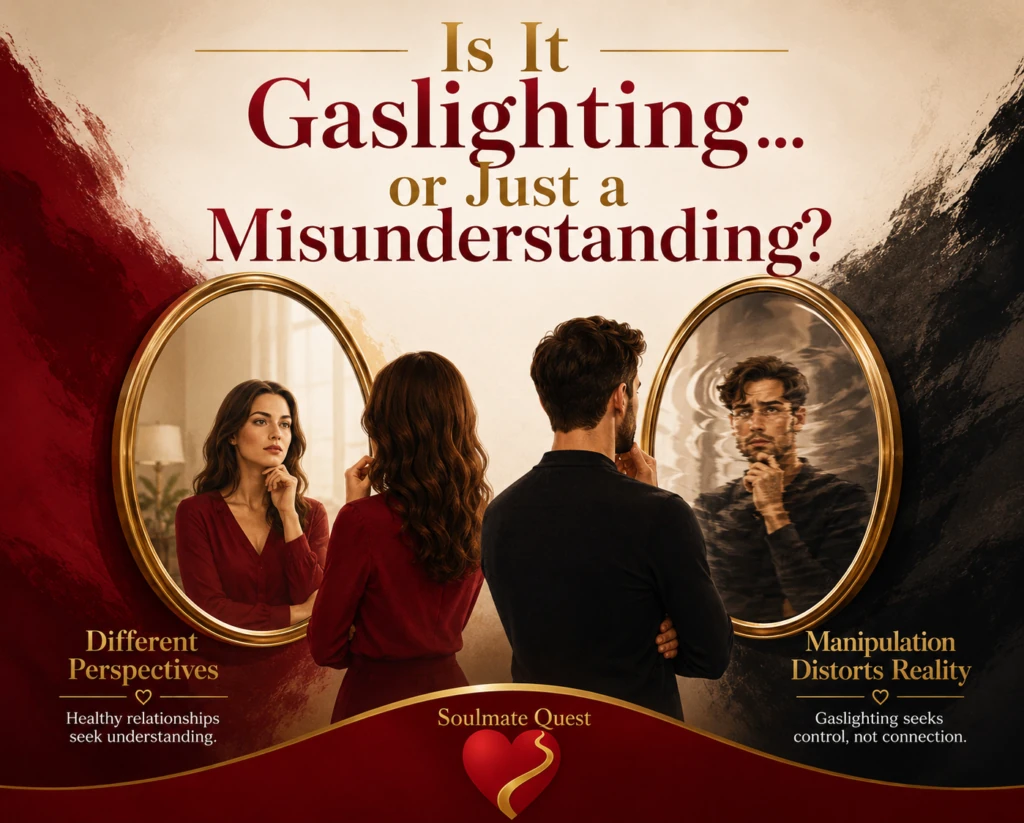
If you've spent any time on social media lately, you'd think everyone has dated a gaslighter.
"He gaslighted me."
"She's gaslighting you."
"My ex was a narcissist and a gaslighter."
The word has become so common that it's starting to lose its meaning.
As a relationship coach and matchmaker, I hear people use the term all the time. Sometimes our client describes genuine emotional abuse. Other times they're describing something much more ordinary: two people remembering the same situation differently. Those are not the same thing.
Disagreements happen in every healthy relationship. Two people can honestly experience the same conversation through completely different emotional filters. One remembers feeling ignored. The other remembers being distracted after a difficult day at work. Neither person is lying. They simply remember the experience from their own perspective.
That isn't gaslighting.
Gaslighting is something very different.
Gaslighting is a deliberate or repeated pattern of causing another person to question their own reality. Over time, the goal, whether conscious or unconscious, is to make someone doubt their memory, their judgment, their feelings, or even their sanity. Instead of resolving conflict, the other person slowly gains control by convincing you that your version of events can't be trusted.
That kind of manipulation can leave people feeling confused, anxious, and increasingly dependent on the person who is distorting reality.
What Real Gaslighting Often Sounds Like
Imagine bringing up something that hurt your feelings.
Instead of listening, your partner responds:
"That never happened."
"You're making things up."
"You're way too sensitive."
"You're crazy."
"No one else would think that."
"You always imagine the worst."
After hearing these responses once, you might simply disagree. After hearing them for months or years, you may begin wondering if you really are remembering things incorrectly. That's where gaslighting becomes dangerous. It slowly chips away at your confidence in your own perception.
What a Misunderstanding Looks Like
Now compare that with a healthy disagreement.
"I honestly don't remember it that way."
"I can see why you felt hurt, but that wasn't my intention."
"I think we're remembering this differently."
"I'm sorry my actions made you feel that way."
Notice the difference.
A healthy partner may disagree with your interpretation, but they don't attack your ability to perceive reality. They stay curious. They ask questions. They try to understand your experience even if it wasn't their intention.
Healthy conflict seeks understanding.
Gaslighting seeks control.
How to Spot the Difference
Ask yourself a few questions.
- Do you occasionally disagree about what happened, or do you regularly leave conversations wondering if you're losing your mind?
- Does your partner take responsibility for mistakes, or do they deny obvious facts every time they're confronted?
- When you express hurt, do they become curious, or do they immediately tell you your feelings aren't valid?
- Do trusted friends and family consistently confirm your experiences, even while your partner insists you're imagining everything?
- Do you feel more confident in yourself as the relationship grows, or less?
Healthy relationships increase emotional safety. Gaslighting slowly erodes it.
Be Careful About the Labels
Here's something I think is important.
Not everyone who remembers events differently is a gaslighter.
People forget things. They become defensive. They hear conversations differently. They bring their own histories, fears, and insecurities into conflict. Memory is imperfect, and perception is shaped by emotion.
Calling every disagreement "gaslighting" shuts down communication instead of encouraging it.
At the same time, repeatedly dismissing someone's reality, rewriting history, denying clear evidence, and making them question their own judgment is not simply poor communication. It can become emotional abuse.
The Bottom Line: The distinction matters.
Healthy relationships are built on trust, accountability, and respect. You should feel safe expressing your thoughts without wondering whether your memory or your sanity will be put on trial.
The right partner won't always agree with you. No couple agrees on everything. But they will respect your experience, even when they remember it differently. Healthy relationships don't require you to abandon your voice. They encourage it.
If this article resonated with you, take a moment to reflect on your own relationships. Are your conversations leading to greater understanding, or are they leaving you doubting yourself?
If you're ready to stop repeating unhealthy patterns and start building relationships based on trust, respect, and emotional safety, Soulmate Quest is here to help. Our relationship coaching, personalized matchmaking, and educational seminars are designed to help you recognize the difference between chemistry and compatibility, attraction and manipulation, and conflict and emotional abuse.
The right relationship won't make you question your reality. It will help you become more confident in it.