Author: Jeannine Kaiser Wolfe: Matchmaker and Relationship Coach
Have you ever heard a man look at a woman and say, "You make me want to be a better man"?
It's one of the most beautiful compliments a woman can receive. Not because she's doing the work for him. She isn't fixing him, raising him, or changing who he is. She's simply creating an environment where the best parts of him naturally rise to the surface.
I see it all the time in matchmaking and relationship coaching.
A woman meets a man with incredible potential. Maybe he isn't a prince yet, but she sees the qualities that matter. Integrity. Kindness. Strength. Ambition. Loyalty. The willingness to protect the people he loves and stand steady when life gets hard. She sees the possibility of the man he can become.
And then something remarkable happens.
The right relationship can elevate a man. A woman who believes in him, appreciates him, respects him, and supports his efforts often inspires him to become an even better version of himself. His confidence grows. His generosity expands. His desire to provide, protect, and pursue the relationship deepens.
But the opposite can happen too.
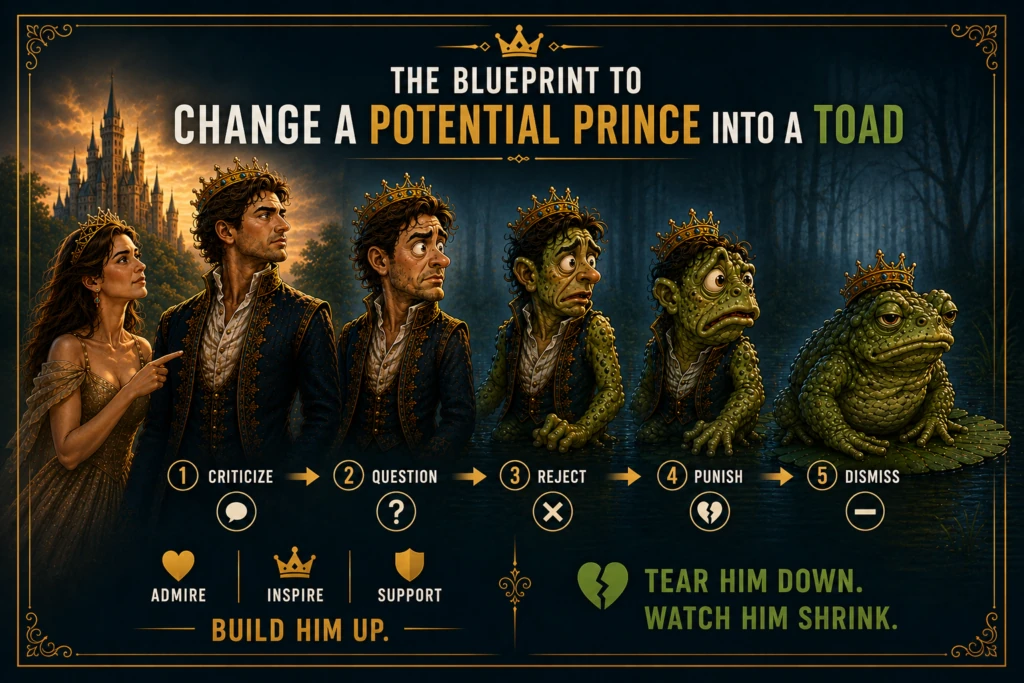
The very same man can slowly begin to shrink inside a relationship where nothing he does feels good enough. Constant criticism replaces appreciation. Questioning replaces trust. Correction replaces admiration. Little by little, the confidence and enthusiasm that once attracted her begin to disappear.
That's the inspiration behind this article.
Women often say they want a prince. A knight in shining armor. A good man with character and integrity. A man who makes her feel emotionally safe, chooses her completely, and stands beside her with loyalty and consistency.
But how a woman shows up in the relationship can play a powerful role in whether that potential prince continues to grow into the man he can become or slowly retreats into a toad, with all of his insecurities and warts on full display.
Before the angry comments begin, let me be clear. This is not about women tolerating bad behavior, arrogance, selfishness, emotional immaturity, or controlling men. Healthy masculinity is not domination. It's calm strength. Initiative. Protection. Emotional steadiness. Character.
And men are not innocent in this dynamic either. Some men stop leading long before the criticism begins. Some withdraw emotionally, stop courting their partner, avoid difficult conversations, or expect admiration while giving very little emotional presence in return. Relationships deteriorate when either person stops making the other feel valued.
But somewhere along the way, many women unknowingly begin dismantling the very qualities they were originally attracted to.
They criticize his leadership while secretly wanting him to lead. They question his decisions, then resent him for becoming passive. They reject his attempts to help, then complain he no longer takes initiative. They punish vulnerability, then wonder why he doesn't open up emotionally. They treat masculinity like a problem to manage instead of an energy to appreciate.
One of the greatest ironies in modern dating is this. Many women say they want a masculine man, but unconsciously create environments where healthy masculinity no longer feels welcome.
And men feel that shift immediately.
A man knows when nothing he does is ever fully right. When his efforts are inspected instead of appreciated. When correction replaces admiration. When he feels more managed than desired.
So what happens?
He stops trying.
Not overnight. Not dramatically. Slowly and quietly.
The compliments become less frequent. The romance fades. The playful pursuit disappears. The emotional investment weakens. The man who once couldn't wait to make her smile begins protecting himself from one more criticism.
Eventually she looks at the same man she once adored and says, "You've changed."
But often, he didn't become a different man.
He became a smaller version of himself inside the relationship.
I see this all the time in matchmaking.
A woman meets a confident, driven, decisive man. His confidence is attractive. His ambition excites her. His leadership makes her feel safe.
Then the relationship settles in.
She corrects how he drives. How he dresses. How he loads the dishwasher. How he handles conflict. How he spends money. How he relaxes. How he communicates.
Death by a thousand critiques.
Months later she tells me, "I just don't feel the same attraction anymore."
Of course not.
Respect and attraction are deeply connected.
Men thrive in environments where they feel trusted, appreciated, admired, and emotionally safe too. Most men will run through walls for a woman who genuinely believes in them. But many slowly shut down emotionally in relationships where they feel perpetually inadequate.
Here's the part nobody likes talking about.
Some women are trying to create emotionally safe men while simultaneously emotionally castrating them.
You cannot constantly diminish a man's confidence and then wonder where his masculine presence went.
That doesn't mean women should become submissive or silent. Healthy relationships require communication, accountability, standards, and mutual respect. But there is a massive difference between influence and control.
A queen doesn't build a king by tearing him apart every day. She builds him through belief, encouragement, appreciation, partnership, respect and emotional safety.
And a healthy man does exactly the same for her. The strongest couples aren't fighting for power. They're protecting each other's spirit. Because the truth is, most people become either bigger or smaller inside a relationship.
The greatest love stories aren't about finding a perfect prince. They're about two imperfect people who consistently bring out the best in each other. In the end, the people we love tend to become larger or smaller in our presence.
The question is...
Which version of your partner are you helping to create?
This is part of the deeper work we do at Soulmate Quest. Helping men and women understand not just how to attract love, but how to protect it once they find it. Chemistry may start a relationship, but the way two people treat each other determines whether a potential prince grows into the man he was meant to be... or slowly turns into a toad.