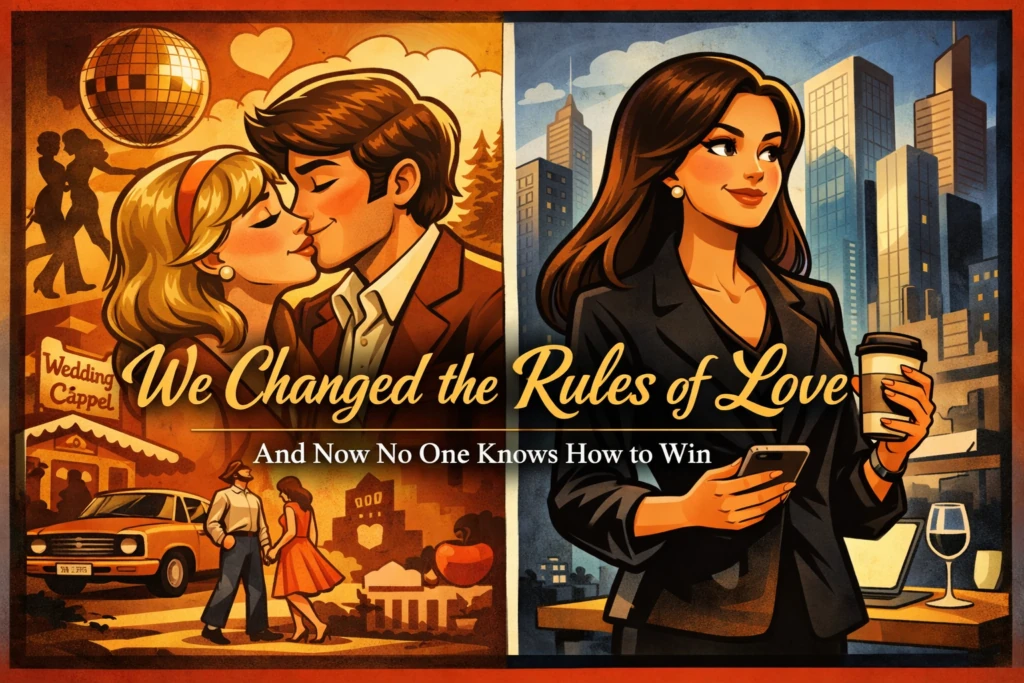
A timeline of how the sexual revolution reshaped dating, relationships, and the expectations between men and women
There is a moment in history when everything shifted. Not overnight, not by accident, but through a series of decisions, policies, and cultural changes that redefined love, marriage, and what men and women expect from each other. If you want to understand modern dating, you have to understand this timeline. You cannot change what you do not acknowledge. And you cannot acknowledge until you understand cause and effect.
In 1960, the introduction of the birth control pill changed everything. For the first time in history, women had reliable control over reproduction. Sex was no longer directly tied to pregnancy. This was not just a medical advancement. It was a cultural earthquake. Women could now pursue education, careers, and relationships without the same level of biological consequence. Freedom expanded. So did choice.
In 1970, no-fault divorce became law, beginning in California and quickly spreading across the country. Women were no longer required to prove wrongdoing to leave a marriage. This gave women the ability to walk away from unfulfilling or unhealthy relationships. For many, this was necessary and long overdue. Divorce rates climbed through the 1970s and into the 1980s as women exercised that option. The message was clear. Marriage was no longer permanent at any cost.
In 1973, the Supreme Court decision of Roe v. Wade further transformed the landscape of relationships and personal choice. Abortion became legally accessible across the United States, giving women an additional level of control over reproduction beyond prevention. This reinforced a powerful and growing belief that sex and its potential consequences could be managed, delayed, or avoided altogether. For many women, this was another layer of freedom. But it also continued to separate sex from long-term responsibility in a way that would have lasting effects on how men and women approached intimacy, commitment, and partnership.
At the same time, women entered the workforce in growing numbers. Opportunities expanded. Earnings increased. And with the passage of the Equal Credit Opportunity Act, women gained the ability to open credit cards and bank accounts in their own name without a male co-signer. Financial independence followed. A woman no longer needed a man to survive. That changed the foundation of relationships.
By the 1970s and into the 1980s, college campuses began to reflect a new reality. Women were not just attending; they were becoming the majority. By the 1980s, roughly half of college students were women, a dramatic shift from previous generations. Education, career, and independence were no longer exceptions. They were expectations.
During this same period, cultural norms around relationships began to loosen. Cohabitation, once taboo, became increasingly normalized between 1980 and 1990. Couples living together before marriage was no longer shocking. It was practical. It was convenient. And for many, it became a substitute for marriage rather than a step toward it.
Then came the continued expansion of reproductive control. Early forms of emergency contraception, the precursor to what we now know as Plan B, and later the abortion pill, reinforced a powerful idea. Pregnancy could be prevented or reversed. Sex could exist entirely separate from long term consequence. This belief shaped behavior in ways we are still living out today.
These changes were revolutionary. Women became earners. Women became decision makers. Women gained the ability to choose their path in life without dependence on a man. That is real progress and it matters.
But every shift creates a counter shift.
As women stepped into independence, men were no longer required to step into the role of protector and provider in the same way they once had to. The external pressure that once shaped male behavior began to ease. And when pressure is removed, behavior changes.
At the same time, a new belief took hold. Women believed that having sex outside of marriage meant freedom. It felt like equality. It felt like control. And in many ways, it was. Until it wasn’t.
But there was a consequence that was not fully understood.
When sex is no longer tied to commitment, it changes what men have to do to earn access to a relationship. Historically, men had to become something in order to attract and keep a partner. They had to pursue. They had to provide. They had to commit. When that structure softened, the incentive to rise into that role softened as well. More and more women are expressing frustration and resentment that men have the expectation of a sexual relationship after a few dates. Many women have chosen celibacy, but that also comes with not dating or seeking a relationship.
This is not about blame. This is about cause and effect.
Women gained freedom, but many did not realize that this same freedom could unintentionally remove the very dynamics that once inspired men to become the best version of themselves in the pursuit of a life partner. And now we are living in the aftermath of that shift.
Today, I sit across from successful, driven, intelligent women who have built incredible lives. They have careers, financial independence, and choices their grandmothers never had. And yet many of them are asking the same question. Why is it so hard to find a man who is ready, willing, and able to step into a meaningful relationship?
At the same time, I see men who are navigating a completely different set of expectations than generations before them. The path is less defined. The roles are less clear. And many have not been called forward in the same way.
This is the conversation we need to have.
Because this is not just history. This is the blueprint of modern dating.
And if we are going to change the future of relationships, we have to be willing to look at the past with clear eyes and honest questions.
What do you think has been the biggest shift in dating and relationships over the last 50 years?
#ModernDating #DatingDynamics #Relationships #LoveAndMarriage #MasculineFeminine #DatingAdvice #RelationshipAdvice #HighValueDating #SoulmateQuest #Matchmaking #DatingCoach #WomenAndMen #SocialShifts #LoveInModernTimes #EmotionalIntelligence #DatingConversation